
Putting a proactive AI companion on the nightstand of a solo-living elder used to sound like an experiment. In March 2026, Washington state made ElliQ reimbursable under Medicaid, the first time a US public health program has fully paid for a social AI companion robot. That is an inflection point: these devices are no longer just consumer gadgets, they are being evaluated as a long-term care service.
ElliQ After Four Years: The New York Pilot Data
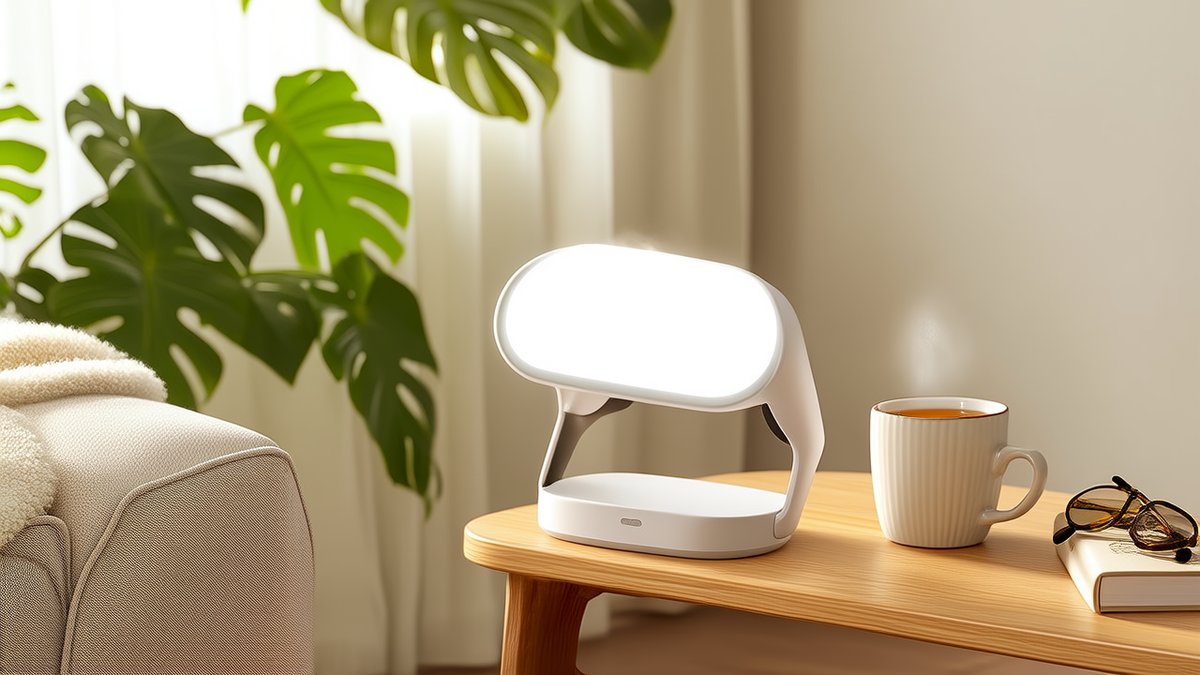
ElliQ is a desktop device built by Israel's Intuition Robotics. Form factor is a small table lamp with a touch screen and a swiveling head. Unlike Alexa-style smart speakers that wait for a wake word, ElliQ is designed to initiate conversation. The user walks into the room, the lamp lights up, the device offers a stretching suggestion, reminds about medication, or reads out the weather. The New York State Office for the Aging deployed around 900 units between 2023 and 2024, with about 750 activated. Published data shows roughly 37 daily interactions per active user, about 23 minutes each, and a self-reported 95% reduction in loneliness. That 95% comes from a single self-report instrument, it does not generalize to all elders, but it does show real impact for a subset of solo-living seniors.
Washington's Olympic Area Agency on Aging ran a smaller pilot in Grays Harbor and Pacific counties first. Their published numbers: 60 daily interactions per user on average, 100% of participants reporting improved wellness, 95% self-reporting reduced loneliness, 145 health-related activities and 130 wellness-related activities per user per year. These are concrete numbers worth checking before any purchase decision, far more useful than the warm-and-fuzzy language on a vendor landing page.
The Cost Structure: Hardware Is Just the Cover Charge
ElliQ's official pricing is a $249 one-time activation fee plus $30 per month on the annual plan or $60 per month on the monthly plan. That puts annual subscription cost in the $360–$720 range. Over four years total cost of ownership easily clears $1,500, and that only covers cloud AI processing and content updates. Fortune's Chinese edition cites an alternate figure of $250 plus $40 per month, the difference comes down to partner channel pricing. Either way, the subscription is the real cost line, not the hardware.
Washington state's policy deserves a separate look. It is the first state to authorize full Medicaid reimbursement with no cap on eligible beneficiaries. Under a public-procurement model, the user pays nothing out of pocket, the subscription is covered by the state. For families considering an out-of-pocket purchase, this policy direction itself is a signal: a three-month local pilot trial is probably better value than a three-year private purchase.
Other Form Factors: Where Paro, Lovot, and Joy for All Sit
Desktop AI devices are not the only option. Paro, the seal-shaped therapeutic robot from Japan distributed in Europe by Inno3Med at around €7,000 including VAT, does not hold conversations. It reacts to voice tone and touch pressure. Strength: two decades of clinical research on cortisol levels in dementia patients. Weakness: no chat, no medication reminders, price out of reach for most families. Joy for All's robotic cat is around €170 in Europe, no internet, no AI, but purrs and chirps when petted, a low-cost emotional companion for dementia care testing. Lovot from Japan's Greymatters is a high-end emotional robot that walks toward the user, tilts its head, and shows 'eyes' on a screen. Base model around $3,000; landed cost in mainland China including duties and logistics can run ¥35,000–¥40,000, and after-sales service depends on overseas parts, expect months if something breaks.
Three Things to Check Before Buying
First, the privacy terms. ElliQ's product page states users can ask the device to forget specific details or ask the company to delete data, with promises of encryption, identifier separation, and no third-party data sales. Some domestic Chinese vendors take an even more direct approach: data does not leave the home, remote features are built on explicit user consent. Before any purchase, get clear answers on where data is stored, who can access it, and whether full deletion is possible.
Second, will the company be around in three years. France-based Cutii ran a subscription model with camera and voice interaction at around €70 per month, then went out of business, and every deployed unit became a brick. The biggest risk with subscription hardware is not the cost, it is the service disappearing. Before buying, check the vendor's latest funding round, revenue sources, and dependency on any single channel.
Third, language and accessibility. The Washington pilot only supported English. Imported premium products aimed at mainland Chinese users often do not support regional dialects either, recognition rates drop noticeably with strong accents.
Market Size: Still Early, Don't Get Distracted by the Growth Curve
QYResearch's global AI care companion robot report puts the 2025 market at about $29.97 million, growing to $33.01 million in 2026, with a 30.8% CAGR through 2032 reaching $165 million. The curve is steep, but the absolute size is still early stage, nowhere near one device per elder. Japan's Ministry of Economy, Trade and Industry published a 2026 policy roadmap for AI robotics social implementation in care, explicitly listing 'monitoring and communication' as a priority category. METI's stated view: procurement decisions should not focus on the device price alone, but on total cost of ownership covering AI performance, operations management, integration with existing care systems, and after-sales service. That framing will push RaaS (Robot-as-a-Service) models wider.
Practical Recommendation
Start by checking whether a local public pilot program can offer three months of free trial. Watch actual usage frequency and the elder's subjective response before any out-of-pocket purchase. If a purchase is unavoidable, prioritize products with a written data-deletion commitment, month-to-month subscription cancellation, and a clear vendor funding history. Families caring for a dementia patient may find Paro or a robotic cat a better fit than a chatty AI device, the clinical evidence is more mature and the subscription risk is lower. Whichever product gets chosen, one principle holds: AI companionship supplements human contact, it does not replace it.
© SWPO. All rights reserved.