
A couple of years ago you most likely only saw wireless charging on the nightstand: a round puck you dropped the phone onto. By 2026 the form has quietly changed. Furniture makers are embedding coils into desktops and bedside tables, and airport lounges, hotels and even cafés are marking 'Qi2.2 charging zones.' But don't assume they are the same thing — home use and public use demand different products. Know these three types before you buy.
First decide: do you want 'drop it on the pad' or 'anywhere on the surface'?
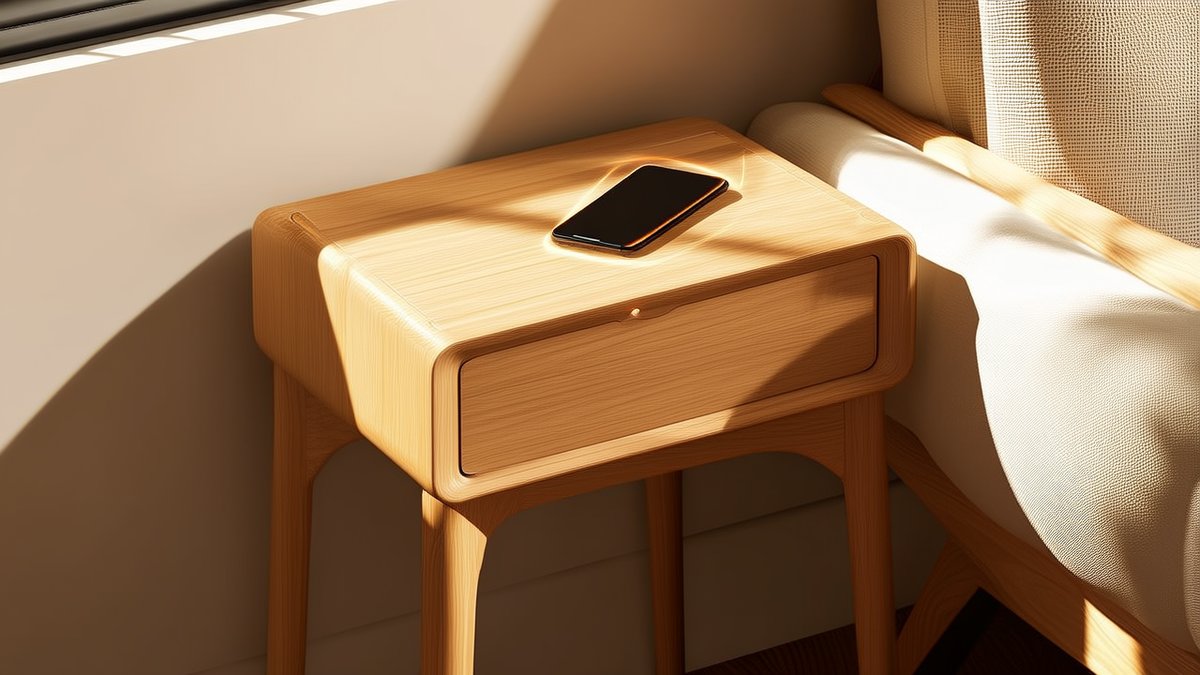
The most common type is the desktop fast-charge pad. Look for Qi2.2 (25W MPP magnetic alignment) or at least Qi2 (15W); the phone snaps on and charges, ideal for a nightstand or desk at a fixed spot. It is cheap and plug-and-play, but you must place the phone on the pad — drift off the coil and it slows. The other type is built-in furniture: IKEA, Herman Miller and Steelcase have all been prototyping this since 2026, burying a whole array of coils under the desktop or bedside surface so the phone charges anywhere on the table, no aiming needed. Most use an AirFuel Resonant-style 'charging zone' that covers the entire surface. The catch is price: a bedside table with this feature still runs USD 500 and up, premium-furniture territory, and it won't reach ordinary homes soon.
One line to separate them: a desktop pad is 'device aligns to pad,' built-in furniture is 'the surface itself is the charger.' Tight budget, just want nightstand charging — buy the pad. Renovating and want a truly cordless desk — consider the furniture, and accept that it is expensive today.
Public spaces play by a completely different rule
Wireless charging in airports, hotels and cafés is not about 'how fast' but 'anyone can use it and someone fixes it when broken.' Airport lounges embed Qi2.2 charging strips into every table so travelers stop fighting over outlets; Marriott, Hilton and similar hotels are piloting properties where the nightstand, desk and even the bathroom mirror are charging surfaces, aiming for selective rollouts in the second half of 2026; cafés turn the whole counter into a charging zone so the phone tops up while you wait for a latte. Points that don't matter at home but matter a lot in public: multi-device concurrency (a table may host five phones at once, so pick multi-coil designs that don't steal power from each other), hygiene and durability (public surfaces get touched by everyone, need wipe-clean, tough material), and maintenance (a dead coil turns the whole table into decoration unless the property inspects it).
A quick pre-buy checklist:
- Fix the use case first: nightstand/desk gets a desktop pad (Qi2.2 preferred); pre-wiring a renovation considers built-in furniture;
- For public scenarios weigh concurrency and maintenance, not just wattage — multi-coil and property upkeep matter more;
- Built-in furniture should cover the whole surface (AirFuel Resonant class), not a fake 'one hot spot' embed;
- Either way, the Qi2.2 mark beats a raw wattage number for compatibility and safety.
At the end of the day, home and public wireless charging differ not in power but in who they are designed for. Set the use case and budget first and you will mostly avoid a bad buy.
© SWPO. All rights reserved.