
Conversational AI companion robots for kids have multiplied over the last couple of years, from plush storytellers to small desk robots that help with homework. When parents shop for one, the first two questions are almost always the same: does it talk naturally, and is the content safe. Both matter, but there is a more basic detail that gets skipped — what actually powers the thing, and how long it lasts on a charge.
To put it plainly, a robot that entertains your child all day is useless if the battery dies by mid-afternoon or if it has to stay plugged in to work at all. I have seen families give up on a device within days because it only worked while tethered to a cable. So before comparing bedtime stories and quiz modes, look at the power setup first.
Three ways to power it, and they are not interchangeable
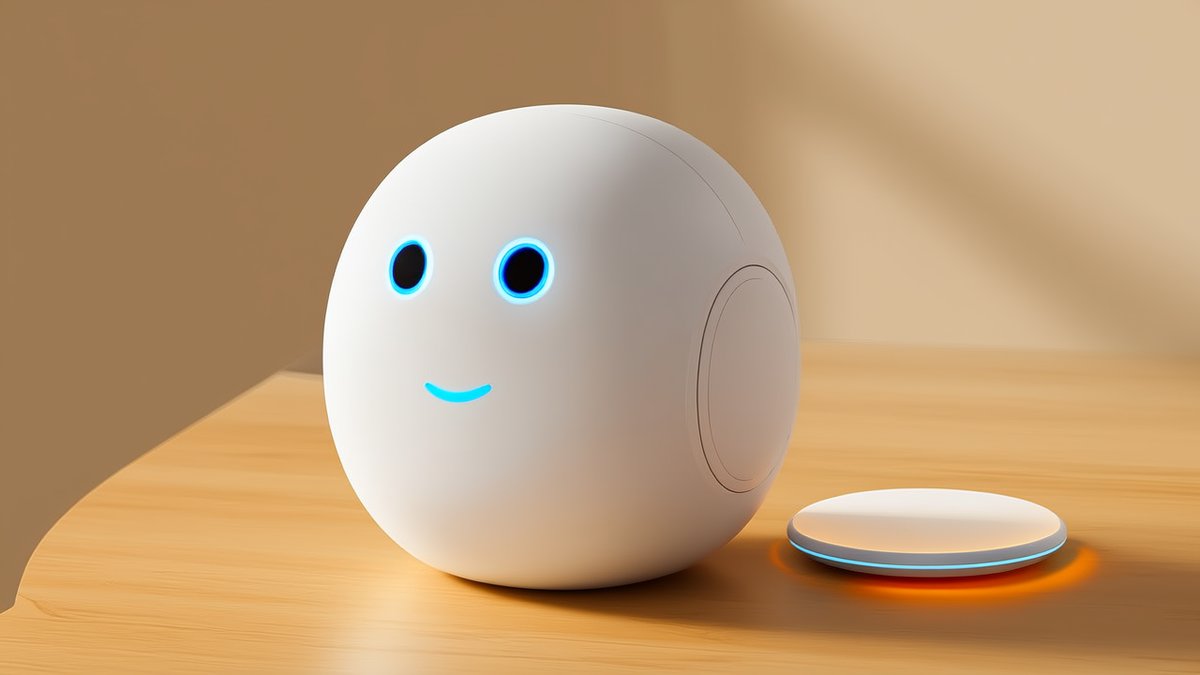
Most kids' companion robots today draw power one of three ways. The first is a built-in battery with a USB-C charging dock: the child drops the robot onto the dock to top up, then carries it around the house, which feels the most like a real toy. The second uses a wireless charging pad as the base, where the robot aligns on top to charge — no plugging, but placement matters, and a slight offset means no charge. The third is pure wired: always plugged in. It is cheap, yet the child is tied to one spot and there is a cable across the desk.
For younger kids I would lean toward the battery version, simply because they can carry the robot from room to room and the interaction feels alive. The wireless-pad approach sounds fancy, but children's robots tend to be small and their bases are not flat, so alignment is harder than with a phone, and a failed charge often reads to a kid as "it is broken." Wired-only makes sense only on a tight budget.
Battery life and safety marks you should not compromise on
On runtime, most kids' companion robots manage roughly two to four hours of continuous conversation, with standby lasting a day or two. Check whether the spec says "continuous use" or "standby" — those numbers can differ by several times. Do not trust a vague "long battery life" claim; ask support how long it actually talks before dying.
For safety, any battery-powered product for children needs overcharge protection and thermal control. In China the relevant benchmarks sit under GB and the EN 62115 toy electrical safety standard; the EU AI Act now classes emotion recognition aimed at children as high-risk and demands a risk assessment. In the US, Maryland proposed an Artificial Intelligence Toy Safety Act in February 2026 that requires pre-market child-safety assessments. Translation: established brands are more careful about overheating batteries and data collection, while no-name gadgets are a gamble.
One last note on privacy, which sounds unrelated to charging but is not. Many companion robots need a network connection to talk, and it is worth knowing where those voice clips and chats go, whether the parent dashboard can turn recording off, and whether anything is stored locally. Battery, power, safety, privacy — get those straight, then worry about whether it tells good jokes.
© SWPO. All rights reserved.