At a get-together, someone's phone drops to 3% and the whole room starts digging for a power bank. What most people miss in that moment is that the wireless pad on your desk is quietly turning into energy infrastructure. In June 2026, the Wireless Power Consortium (WPC) held a key off-cycle meeting in Beijing, hosted by Xiaomi — the first time that meeting took place in China. Apple, Google, Xiaomi, OPPO, Huawei, NXP and Renesas were among the 20-plus companies that sat down to lock in the technical architecture for the next-generation 50W standard. When a mere accessory feature pulls that many rivals into one room, the industry has clearly started treating it as foundational capability for the next decade.
Why the standard is already racing toward the next tier
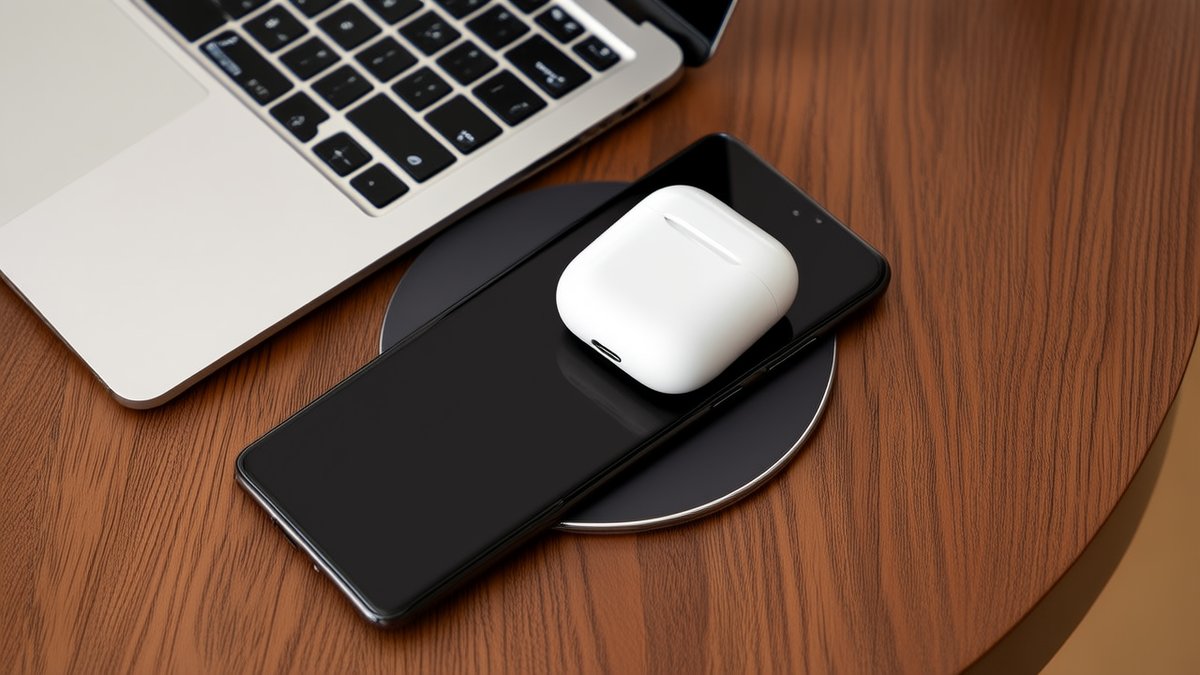
The momentum is visible in the numbers. Qi2.2 (branded Qi2 25W) opened for certification in July 2025, and over 40 manufacturers submitted products within the first 72 hours. By February 2026, certified products reached 637 — roughly nine times the 69 counted in August 2025. Across all versions, WPC now lists more than 13,000 certified products and over 300 member companies. The point of 25W is not just speed; it turns magnetic alignment from Apple's proprietary MagSafe into a common spec, so the Android side finally gets snap and charge without compromise.
But 25W is not the ceiling. The Qi 50W track advanced at the Beijing meeting targets finalization in 2028 as a cross-brand 50W solution. Xiaomi is pushing its small-inductance, low-voltage, high-power architecture, arguing for lower loss, better thermal behavior and thinner devices. OPPO, OnePlus and Xiaomi already ship 50W or even experimental 80W-plus private solutions, but those stay locked inside each brand. Qi 50W's value is interoperability, not raw watts: one pad feeding a laptop (~65W), a phone (25W) and earbuds (5W) at once, without a proprietary protocol per vendor.
What the real turning point means for buyers and factories
Silicon is already paving the way. MediaTek's MT5820 transmitter IC, announced in June 2026, supports Qi2.2 and reaches up to 100W transmit power — a hint that within a product cycle or two, laptops could genuinely drop the power cable. On the market side, Next Move Strategy Consulting projects the global wireless charging market to hit USD 71.47 billion by 2030 at a roughly 15.8% CAGR, with growth spreading from phone accessories into cars, furniture, hotels and offices.
The practical advice for buyers is short: buy the newest tier you can in 2026, because Qi2.2 pads are backward compatible, so 25W costs you nothing to future-proof; stop paying extra for 15W-only pads. For brands and ODM/OEM teams, watching the Qi 50W direction matters more than chasing private wattage — interoperability is the ticket to scale. For most users, the real shift is not a faster phone charge but the invisible wireless energy network taking shape in cafes, airports and hotels.
© SWPO. All rights reserved.