
A friend's phone hits 3% and the whole room starts hunting for a power bank. What most people don't realize is that the phone in your pocket can act as a wireless charging pad itself — the feature is called reverse wireless charging. Huawei shipped it first on the Mate 20 Pro back in 2018, and today it's basically standard on Android flagships. But how does a coil built to receive power flip into a transmitter? Taking it apart makes it clear.
How the coil is used backwards
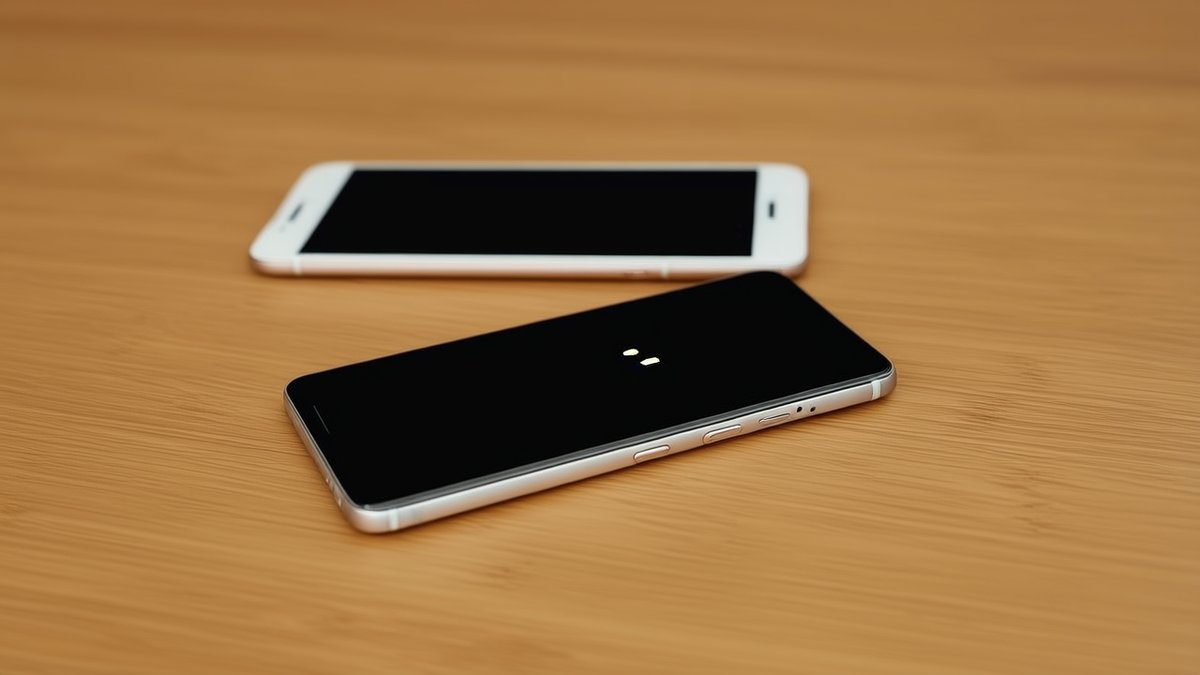
The wireless coil inside a phone normally plays the receiver (RX): on a pad, the other side's field induces current in it. In reverse mode, the main controller tells the power-management chip (PMIC) to boost the battery's roughly 3.7V up to about 8V, then an H-bridge inverter generates 110–205 kHz AC to drive that same coil. It becomes a transmitter: the alternating field crosses the air and induces current in the coil of the device pressed against it, which rectifies and regulates the power into its own battery. The two sides talk through load modulation — how many volts you need, ease off if it's getting hot — all negotiated automatically. It's the same electromagnetic-induction principle as a charging pad, just with the roles swapped.
The real limit: it's a rescue, not a replacement
The output tells the story. How-To Geek notes reverse wireless charging is generally capped at 5W; ScienceInsights measured 2.5–5W, adding about 10–20% to the receiving device in half an hour. Wireless already burns roughly 39% more energy than a cable, and that extra turns into heat. So it's an emergency top-up, not a daily driver. Samsung's Wireless PowerShare refuses to start unless the phone itself is above 30%; Google's Battery Share lets you set a 10–50% auto-stop so you don't drain yourself dead. Alignment is the biggest trap: coils must sit close and centered, and a thick or metal case cuts the link; many phones also need a manual toggle in Settings, Battery the first time. iPhone 15 and later only do wired reverse charging (USB-C at about 4.5W for AirPods or the Watch), not wireless.
For travelers and anyone at a gathering, the feature earns its keep. Topping up earbuds or a watch is genuinely handy; filling another phone takes far too long to rely on. One trick: rest your phone on a pad while it's plugged in, and it becomes a pad that doesn't drain its own battery. When choosing a phone, don't just check does it support it — look at the reverse wattage (Huawei and Honor reach 20–27W, Samsung about 15W, Xiaomi 10–20W) and whether it has magnetic alignment. That's the gap with Qi2.2 magnetic fast charging: one depends on placing it right, the other on snapping it steady.
© SWPO. All rights reserved.