
Most people picture wireless charging as power sent through the air, but a better image is a magnetic field penned under the pad. The extra watts that take Qi2.2 from 15W to 25W are exactly what force makers to police that field more tightly.
Stray flux is not magic: the fringe field outside the pad causes trouble
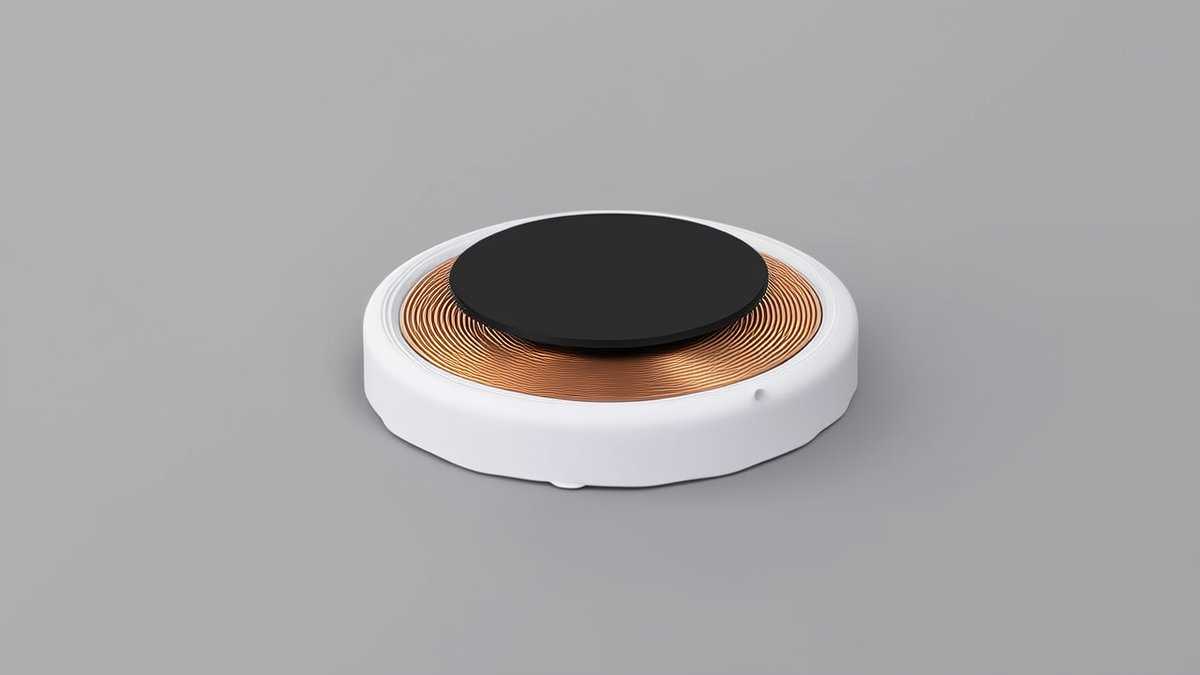
When a coil runs, besides the main field aimed at the phone, some stray flux leaks past the pad's edges. At low power it is harmless, but at 25W it can interfere with nearby items: transit cards and room keys get accidentally read, mechanical watches get magnetized, and the magnet in a charging earbud case can be pushed the wrong way. WPC's Qi2.2 certification actually measures stray field beyond the pad edge, and a transmitter must prove it stays under the limit to pass.
From the human side, IEC 62311 sets limits on electromagnetic-field exposure from electronic devices, and a small appliance held close to the body falls under it. So keeping the field under the pad protects cards and clears certification at the same time.
How the shield works: a ferrite sheet pushes flux back
The trick is the ferrite sheet stuck behind the transmit coil. With its high permeability, the flux that would leak downward hits the ferrite and is reflected back into the gap between coil and phone instead of escaping. It is a one-way wall for the magnetic field: couple what should couple, bounce back what should not.
This is also why alignment matters so much. Magnetic alignment presses the receiver coil right above the transmitter, lifting coupling efficiency to 85-92%; off-center, the main field loses its grip and more energy turns into stray flux and waste heat. In the 25W era, the magnet array is not just sticks in place, it is a safety part that contains the field. When choosing, the certification and a real shielding structure matter more than the printed wattage.
© SWPO. All rights reserved.