
For many people the first thing after getting home is to drop the phone onto the charger, yet a full night later it is still not full and the pad is hot. The first reaction is 'this pad is no good'. Often the pad is fine, the placement is wrong.
Wireless charging relies on magnetic coupling between the pad's coil and the phone's receiver coil. The more aligned and closer the two coils are, the higher the efficiency. Once something is wedged in between, or the wrong material sits underneath, coupling drops, power drops, and the wasted energy all turns into heat. The three things below cover most 'slow charging' cases.
Keep the case thin, especially no metal
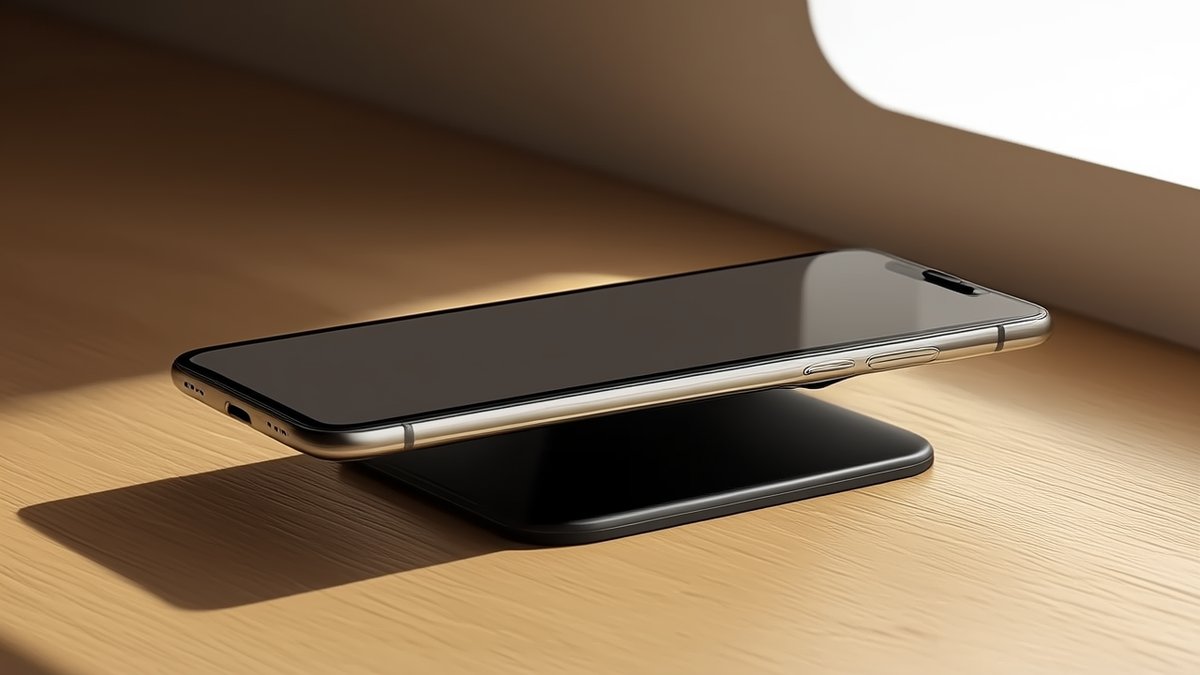
The most overlooked culprit is the case. Silicone or magnetic cases over a few millimetres push the coils apart, and end-to-end efficiency can fall from 85% to below 60%. Worse are cases with metal plates or magnetic mounts: metal in the field heats up by induction, and the pad lowers power on purpose to protect the battery. Pick a thin case with no metal; for magnetic use, choose a certified thin magnetic case.
The second trap is the desk surface. Put the pad straight on a metal desk or iron side table, and the ferrite shield on the pad's back 'fights' the metal, leakage rises, efficiency drops, and in bad cases the pad thinks a coin is on it and shuts off. Wood, stone and plastic surfaces are safest; if it must sit on metal, slip a non-metal mat underneath.
Align before you let go
Last, do not just drop it. A Qi2.2 magnetic pad snaps into place, so less of an issue; but a plain placement pad (BPP/EPP) has no magnet, and 5mm off already costs efficiency. Nudge it until the light stays solid and the phone gives a small haptic (many models do), then walk away.
One line: thin case, non-metal surface, align before release. Get these three right and your 25W pad actually delivers 25W instead of cooking all night.
© SWPO. All rights reserved.