
You may not have noticed this: on the same wireless charging pad, a phone can regain half its battery in minutes while earbuds sit there trickling along far more slowly. The pad has no eyes, so how does it know what is on top and how much power to send? The answer is not magic. It is a quiet conversation happening inside the coil, and the industry calls it the handshake.
Ping first, then introduce yourself
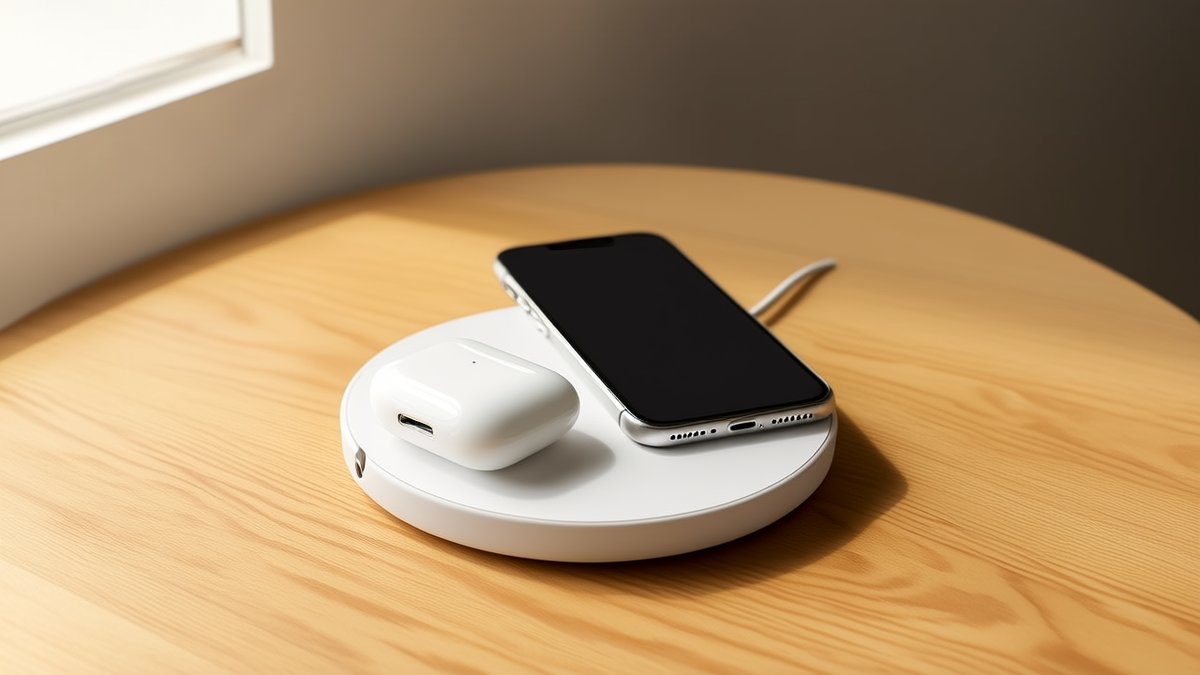
Qi uses in-band communication. The transmitter coil first sends a very short power pulse called a digital ping, which is basically a knock on the door. If a receiving device is really there, its coil senses the field and starts talking back through load modulation: it slightly changes the load on the receiving coil and encodes information back to the transmitter using amplitude shift keying, or ASK. The first reply is a signal strength packet that says, I can feel your field. From there the transmitter judges whether the position is right and whether a foreign object is present, then moves into the identification and configuration phase. The receiver reports its identity, the maximum power it supports, and the voltage and current it wants. Only after the two sides agree do they enter the power control loop, where the receiver keeps sending control error packets saying give me a bit more or I am full, and the transmitter adjusts.
That is why a phone charges faster than earbuds. Phones have long supported the EPP or even MPP tiers of 15 to 25 watts, while an earbuds case usually only speaks the basic 5 watt tier. The receiver states its tier in the configuration packet, so the transmitter never forces more power than the device can take. The difference in speed comes straight from that handshake.
It stops on its own when it misreads: FOD and the temperature gate
This same mechanism quietly solves two other headaches. One is metal objects. A key or a coin also induces load modulation, but the spec includes foreign object detection, or FOD. The transmitter compares how much power it sent against how much the receiver says it received, and if the gap is too large it decides something is trapped under the pad and cuts power. That is why the pad shuts off when you place the wrong thing on it. The other is heat. Qi2.2 holds the 25 watt surface temperature below 40 degrees Celsius, and during the power loop the transmitter also steps down when the receiver reports rising temperature instead of pushing full power the whole time.
At the end of the day, how smooth wireless charging feels comes about 70 percent from this handshake. When you shop, do not only stare at wattage. Look at whether the pad recognizes devices accurately and whether it knows when to back off. The first decides speed, the second decides safety.
© SWPO. All rights reserved.