
A lot of people carry a vague suspicion that wireless charging wastes more power. The math is actually clear. Wireless charging pushes energy across a gap between two coils: electricity leaves the wall, becomes high-frequency AC, jumps the air gap into the phone's receiver coil, then gets rectified back to DC for the battery. Every step leaks something, and that air gap is the single biggest hole.
Here are the numbers, pulled together from several teardown measurements. Original Qi sits around 70–80%, meaning 20–30% of the electricity you pay for turns into heat in the pad and on the phone's back. Qi2's magnetic alignment locks the coils in place, cuts eddy-current loss, and reaches 80–85%. A decent GaN wired charger typically hits 90–95%. Put side by side, wireless wastes roughly 47% more energy per charge than a quality wired setup — note that is the extra waste ratio, not 47% of the total bill.
Where the watts leak
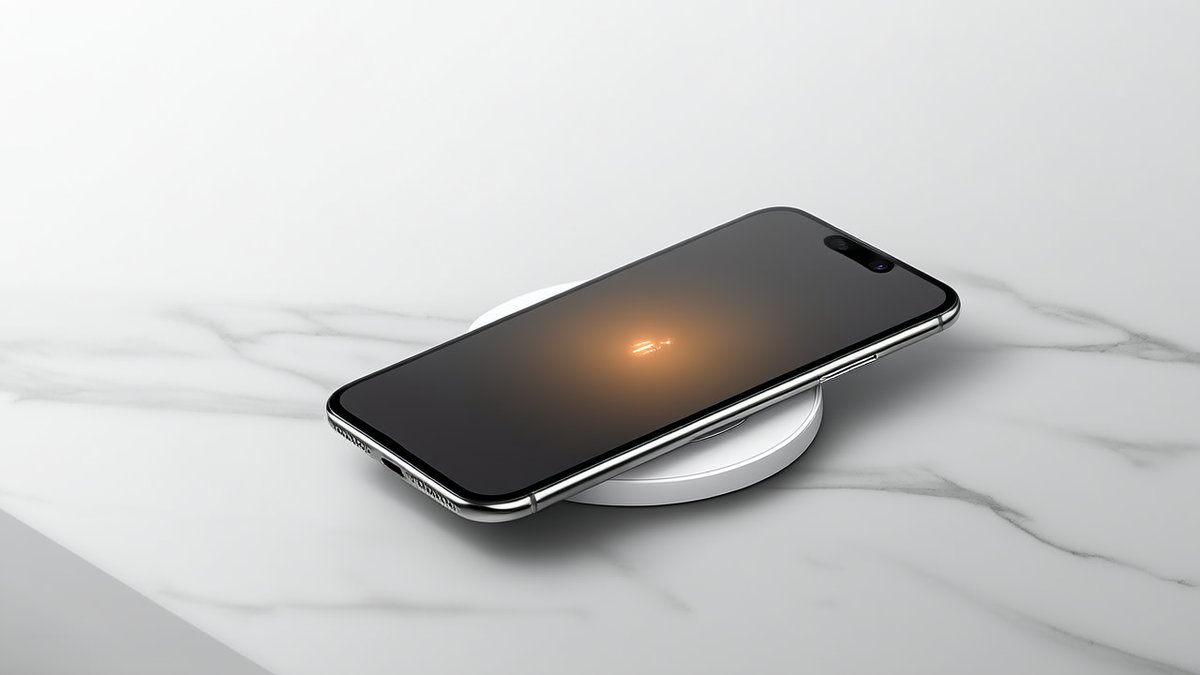
The first leak is the inverter on the transmitter. Turning DC into high-frequency AC with old silicon switches is slow and lossy; swap in GaN and switching jumps into the hundreds of kilohertz, magnetics shrink to about a third, switching loss drops more than 40%, and idle draw falls under 50 mW, inside the Qi standby spec. The second leak is coil coupling, and misalignment makes it far worse — so magnetic alignment is not a gimmick, it genuinely saves power. The third is rectification and wiring, where wired wins simply because the cable delivers electrons directly with no induction step.
There is one more line item people forget: standby. Many wireless pads stay plugged in around the clock and an active standby burns 0.3–1.5 W. Over a year that adds up. The good news is that from late 2025, new chargers mostly pull standby under 0.1 W or add smart sleep.
So the takeaway is not 'wireless equals waste' but 'it depends how you use it.' For overnight slow charges and drop-and-go convenience, wireless earns its keep. For a 15-minute top-up or if you watch the electricity bill, plugging in is the better deal. GaN and magnetic alignment are quietly erasing the gap — in a couple of years this math may barely matter.
© SWPO. All rights reserved.