
Buying a talking plush toy for a small child should be a warm moment. Yet most of 2026 has brought one cold headline after another about AI toys. A company making an AI dinosaur toy left the conversation logs of 50,000 children in a database anyone with a Gmail account could open. Research published by Common Sense Media in February 2026 found that more than a quarter of AI toy outputs included inappropriate content such as self-harm and drugs, and recommended against AI companion toys for children five and under, with extreme caution from six to twelve. The industry is running; the rules are only now catching up.
The market started first: 1,500 companies and a promise nobody verified
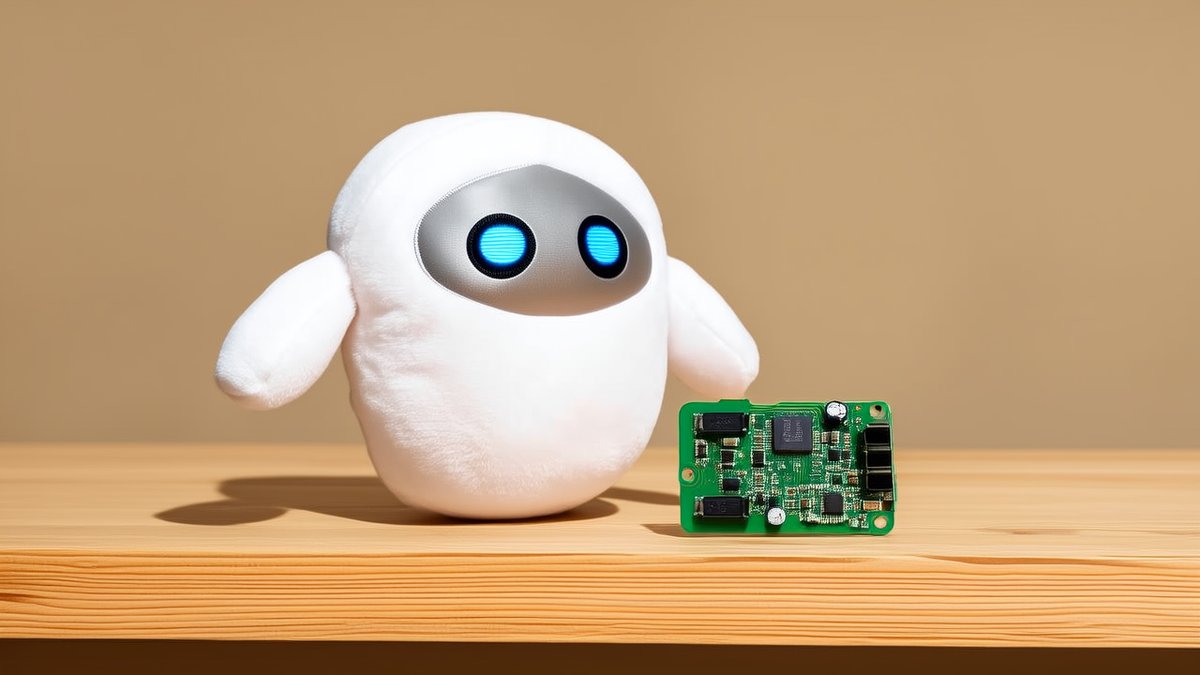
According to Wired, more than 1,500 AI toy companies were registered in China alone by October 2025. Building a chatty plush toy has become absurdly cheap: ready-made developer APIs plus low-cost hardware let a small team ship in weeks. Established players like Miko claim more than 700,000 units sold worldwide. Sharp launched its talking PokeTomo in Japan in April 2026, a major Chinese brand's plush toy sold 10,000 units in its first week, and Mattel went as far as partnering with OpenAI. That is exactly the problem. From the outside the category looks uniform, soft glowing animals all alike, yet safety, quality and data handling differ by orders of magnitude. Some products carry COPPA Safe Harbor certification; others are consumer-grade language models wrapped in plush. Parents scrolling Amazon have no reliable way to tell them apart.
Regulation moved past the meeting stage: ratings, bills and a $500,000 penalty
The turning point arrived in 2026. In May, Common Sense Media helped launch the Youth AI Safety Institute, and CEO James Steyer described the model plainly: independent, published safety ratings for AI toys, built like crash-test scores so parents can check a number before buying instead of waiting for legislation. Congress moved at the same time. Senator Duckworth introduced the Children's AI Toy Safety Act (S 5171) in July, setting federal safety standards for AI products marketed to children under 13, covering data collection, content generation and mental health impact. Representative Blake Moore's version goes further, making the sale of a toy with a built-in chatbot a violation of federal consumer safety law, while California Senator Padilla's SB 867 proposes a four-year moratorium. Enforcement is not just talk either. The FTC has already acted against robot toy maker Apitor Technology for collecting children's data, including location information, without parental consent, a COPPA violation. The $500,000 penalty was later suspended after the company said it could not pay.
Put simply, what changed in 2026 is not that the problem is solved, but that there is finally something to look up, compare and fine. For parents it means asking sharper questions before checkout: does this maker have a third-party safety rating, does the privacy policy spell out how children's data is retained and deleted, where do the conversations live and who can read them. For the people building these products the signal is just as clear. An AI companion pitch will have to stand on verifiable compliance rather than advertising copy. The Toy Association working with members on voluntary AI guidelines is itself an admission that hard standards are coming. The piece to watch is Europe, which may move before the United States. Under the EU AI Act's risk classification logic, companion AI toys aimed at children landing in the high-risk category is only a matter of time, and that means conformity assessment before market entry rather than patchwork after a breach.
© SWPO. All rights reserved.