
When the WPC opened Qi2.2 certification in July 2025, more than 40 manufacturers submitted products within the first 72 hours. By the end of February 2026 the Qi2.2 roster had reached 637 products, roughly nine times the 69 recorded in August 2025. The numbers move fast, but anyone who has shipped in this category will tell you the 25W mark is not only about coils and cooling. There is a gate that rarely appears on a marketing page: a security chip and a full certificate chain.
One chip plus a certificate chain is what buys the 25W mark
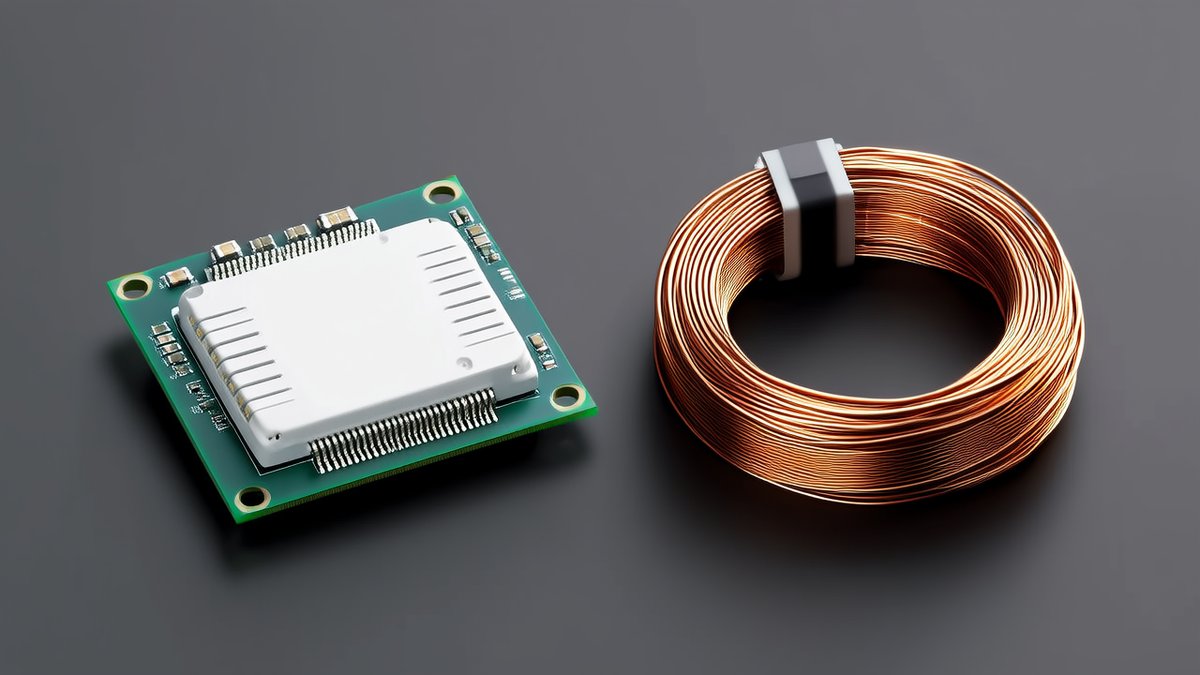
The story starts with Qi 1.3.3, when authentication first became mandatory for EPP transmitters. Qi2 made the rule harder: a certified transmitter must support authentication, a charger limited to the base power profile cannot earn Qi2 certification at all, and every Qi2 product must include EPP or MPP.
Authentication rides on a Product Unit Certificate, or PUC, issued through a chain of trust. The WPC root CA sits at the top, manufacturer CAs supplied by authorised Manufacturer CA Service Providers sit in the middle, and a PUC for each individual product sits at the bottom. A manufacturer must sign the authentication agreement, which only WPC members can do, buy PUCs from an MCSP, and tell the WPC licence administrator which MCSP will supply them. The WPC publishes around fifteen MCSPs, spanning NXP, STMicroelectronics, Infineon and Microchip alongside Fudan Microelectronics, CEC Huada, Datang Microelectronics and others.
Two timing details catch people out. The root CA signs in weekly batches, and a submitted CSR can take up to five business days to process. Certification is not a today-decide, tomorrow-ship step; it needs a slot in the production schedule.
The real cost of mass production: membership, certification fees, and a chip per unit
Three line items make up the gate. Membership first: WPC adapter membership runs about 18,000 US dollars a year, and regular membership sits between 30,000 and 40,000 dollars, effective since January 1, 2024. Certification fees second: 750 dollars per new product, 250 dollars for a similar product, plus a 1,500 dollar fixed compatibility test fee for Qi v2.0.x. The chip comes third, and it cannot be skipped.
The specification requires a tamper-resistant secure storage subsystem. An ordinary MCU simulating authentication in software will not pass, so a dedicated secure element is mandatory. Options are plentiful: Infineon's OPTIGA Trust X handles mutual authentication with ECDSA across a minus 40 to 105 degree Celsius range, STMicroelectronics offers the CC EAL5+ certified STSAFE-A110, and the automotive STSAFE-V100-Qi carries AEC-Q100 qualification. In plain terms, every 25W magnetic charger carries an extra security chip in its bill of materials, and each model maps to its own PUC.
For buyers the takeaway is practical: a page that says only 25W tells you nothing. The Qi2.2 or Qi2 25W mark means the product passed certification, carries the chip, and can actually negotiate power with your device. For factories and solution houses building their own brand, the conclusion is blunter: schedule chip procurement and PUC issuance into the project plan, and do not let mass production wait on a certificate whose lead time you do not control.
© SWPO. All rights reserved.