
The best thing about magnetic wireless charging is that it removes the alignment ritual: drop the phone on and it snaps into place. But mention magnets and a set of images surfaces automatically, from spinning compasses to erased bank cards to pacemakers. Some of those fears are real, some are not, and they split neatly into three groups.
What actually reacts: the electronic compass, and magnetic-strip cards
Start with what does not care. Phone storage is flash memory, unrelated to magnetic fields. Screens are OLED or LCD and indifferent to magnets. NFC coils and magnets coexist by design. Location comes mainly from satellites plus gyroscopes, with the magnetometer playing only a supporting role. So the idea that a magnetic charger harms the phone can be set aside.
Two things do react, both mildly. The first is the electronic compass: magnetic accessories shift the reading temporarily, which can throw off the direction arrow in a maps app. The fix is easy, lift the phone off and follow the figure-eight recalibration prompt. While driving, heading comes mostly from satellite position and the gyroscope, so real navigation barely notices.
The second is cards, with a caveat. Modern chip and contactless bank cards are not realistically threatened by these fields. The vulnerable ones are cheap magnetic-strip items: hotel key cards, access badges, transit tickets. That is exactly why magnetic wallets add a shielding layer. Apple's own support guidance is explicit: before placing an iPhone on a magnetic charger, make sure no credit cards, hotel keys or transit cards sit between the phone and the pad, and remove metal or very thick cases while leaving a magnetic case in place.
Implanted medical devices are the one group that deserves real caution
No hedging here. For most people the field is weak, but pacemakers and implantable defibrillators are the exception. Apple advises keeping magnetic accessories at least 15 centimetres from an implanted device during normal use, and at least 30 centimetres while the device is actively charging wirelessly. If someone in the house has one, the simplest move is to keep the magnetic pad off the nightstand and put it on the other side of the bed or on a desk.
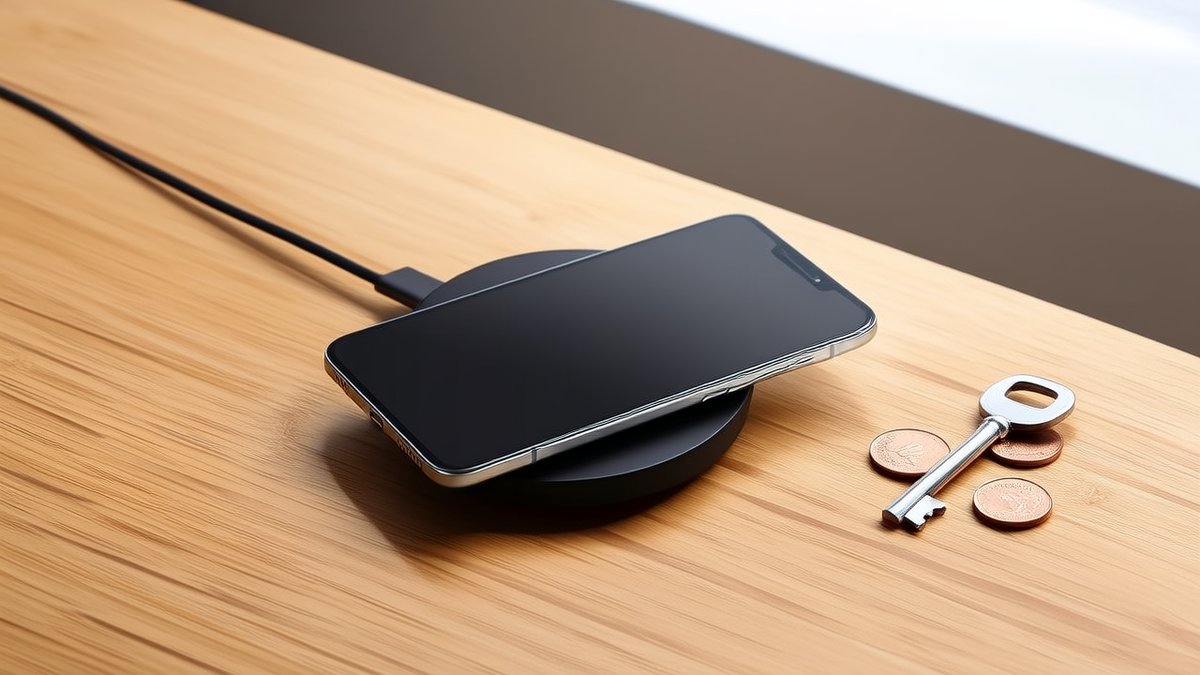
One more detail people forget: do not leave coins, keys, paper clips or foil on the pad. They take no part in charging, and an alternating field will drive eddy currents into them and heat them up, which is precisely what foreign object detection exists to catch. Engineers also reduce the side effects on purpose, arranging the magnet array so the field is reinforced toward the phone and cancelled behind it, which saves energy and disturbs the surroundings less.
One-line advice: the magnets are not the problem, the position and the objects are. Take the cards out, clear the metal, keep medical implants at a distance, and most of the compass and demagnetisation worries can be dropped.
© SWPO. All rights reserved.