
Moving a charging pad onto the kitchen counter or the bathroom cabinet is a common impulse these days. You want the recipe on screen while cooking, or the phone topped up while you get ready. Yet kitchens and bathrooms are the least friendly rooms in the house for electronics, and three hurdles stand in the way.
Hurdle one: the word waterproof is itself watered down
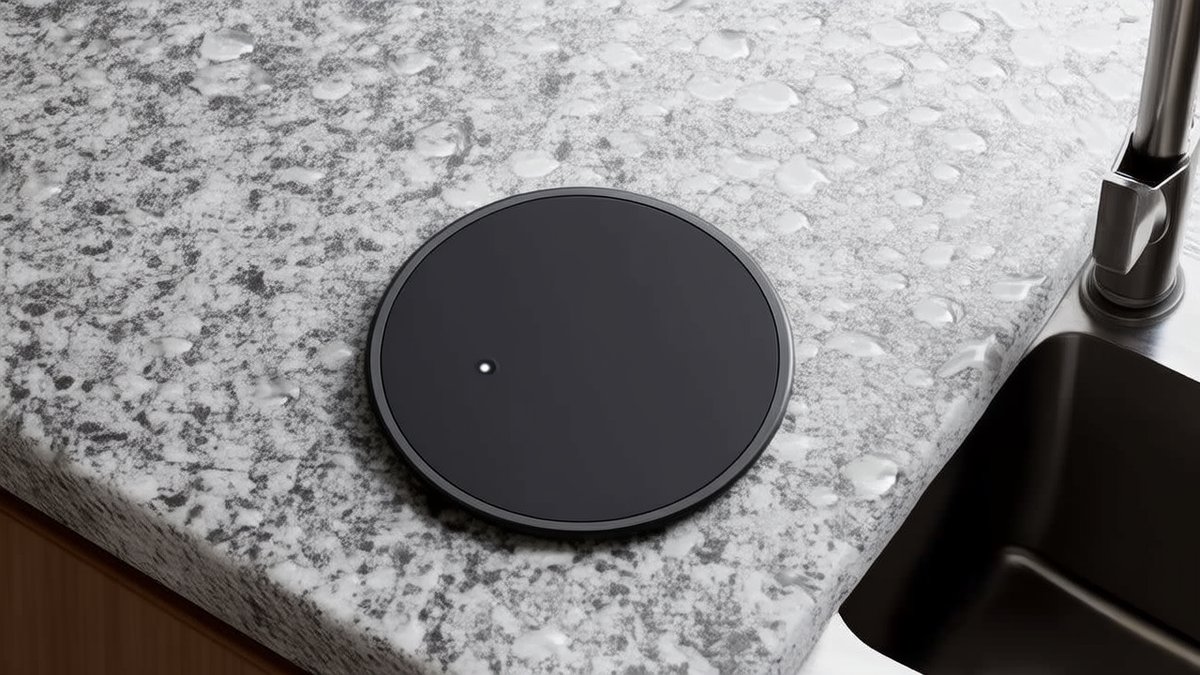
Strictly speaking, no consumer wireless charger is waterproof. What you can read is its ingress protection rating under IEC 60529. On that scale IPX4 means protection against splashing from any direction, and IP65 adds dust protection plus protection against water jets, which covers ordinary kitchen splashes. IP67 and IP68 are about temporary immersion; IP68 is normally defined as 1.5 metres of fresh water for 30 minutes.
Here is the catch many people miss: an IP rating only holds while the unit is new and its seals are undamaged. A charging pad cycles between heating up and cooling down, the seals age, and moisture creeping in as condensation is far more common than dropping the thing in a sink. Set the floor at IP65 for kitchen and bathroom use, and do not expect a plain desk pad to tolerate wet hands.
Hurdle two: grease, heat, and the wiring nobody thinks about
Grease and heat are trickier than water. Cooking oil and dust film over the cooling surface and the coil, hurting heat dissipation first and then confusing foreign object detection, so a coated pad may fail to cut power when it should. Three hard rules on placement: keep it off the tops of hobs, ovens and dryers, keep it away from exhaust vents, and never leave metal on the pad, because spoons, foil and keys will heat up from eddy currents, the exact situation foreign object detection exists to catch. Qi2 already writes thermal control and foreign object detection into the specification, so the mark tells you more than the wattage number.
The electrical side is easier to overlook. Outlets near a counter should sit on a residual-current protected circuit, cables should not cross the sink, and where possible they should run through under-cabinet channels. For a counter-embedded module, leave an air gap for cooling rather than sealing it inside a metal box. Surface material also shapes the plan: on stone or wood, a one to three millimetre non-metallic silicone mat under the pad adds grip and diverts splashes with almost no efficiency cost, while a metal counter or a thick metal case blocks the field outright and efficiency collapses.
One-line advice: for kitchens and bathrooms, trading a little power for a lot of protection is a good deal. Choose a model rated IP65 or better with thermal and foreign object detection certification, keep it at least thirty centimetres from the sink, plug it into a protected circuit, and if the area genuinely stays wet, use a cable or move the pad to the dry side.
© SWPO. All rights reserved.