
For a decade, wireless charging has meant phones. A different track has been forming, and it is not about phones at all. It powers the devices nobody wants to touch twice: temperature and humidity sensors, electronic shelf labels, door locks, cameras. The logic is simple. You handle your phone daily, so swapping a battery is trivial. A sensor tucked into a ceiling void or stuck to a shelf needs a technician.
Three routes, all shipping, modest power but enough
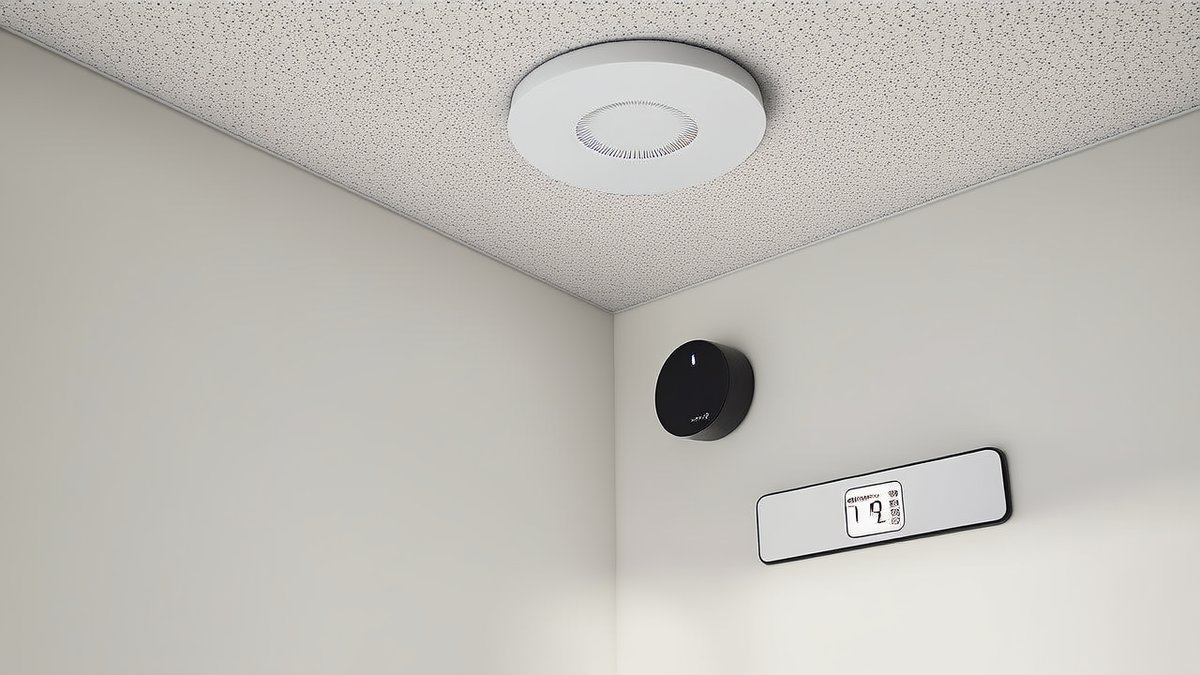
The first is radio frequency. Companies in this space treat the transmitter a little like a router, radiating energy into the room while a dedicated chip on the receiving side rectifies it into direct current. One vendor has demonstrated coverage spanning two hundred feet, aimed squarely at making temperature sensors and Bluetooth tags battery-free. A Korean company has pushed a multi-band approach to several metres with a receiver chip delivering a few watts at around sixty percent efficiency, secured FCC Part 18 certification, and prototyped a USB-C dongle with Samsung that charges a phone at a distance. The second route is infrared. Ceiling-mounted transmitters direct infrared beams at smart locks and sensors across roughly ten metres at a few watts per device, pitched at hotels and retail, where equipment starts topping up the moment it enters the room and the user does nothing. The third is magnetic resonance, built into a desktop or a wall so the surface itself becomes a power zone. One demonstration delivers around a hundred watts total across multiple devices, including a fifty watt receiver powering a laptop.
Why this matters to anyone in wireless charging
All three look far from phones, yet they attack the same weak point: connectors and batteries are the most fragile parts of any electronic product. Sealed enclosures cannot take a port, devices buried in structures cannot be visited for battery swaps, and outdoor or wet environments make both worse. For wireless charging makers and brands there are two implications. One is reuse: coils, drivers, foreign object detection and thermal control transfer directly, so a team does not start from zero. The other is a shift in market logic. Phone accessories are a red ocean with margins competed away, while powering industrial sensors, retail labels and building locks is business-to-business work judged on reliability and deployment cost, not on the wattage printed on an e-commerce page.
Do not misread this as batteries disappearing next year. Radio frequency and infrared still carry low power density, are constrained by regulatory limits, with some bands capped around thirty watts before extra approvals, and lose efficiency to distance and obstruction. They suit low-power, long-life devices whose battery replacement is expensive, not laptops or cars. Drawing that boundary makes the opportunity clearer. This track does not compete with phone chargers. It competes with batteries.
One-line advice: for anyone building wireless charging products, remote power deserves a look as a parallel product line rather than a gimmick. The accessory experience transfers, but the customers, certification paths and acceptance criteria are entirely different.
© SWPO. All rights reserved.