
Outdoor power has quietly changed over the last couple of years. A few years back you left home with a chunky power bank and a tangle of cables; now shelves carry small boxes that stack a solar panel on top of a Qi wireless coil. They sit in the sun by day and you drop your phone on top to charge at night. Sounds effortless, but anyone who has run the energy math knows power leaks at every stage.
The solar panel converts light to electricity first, and efficiency is the first bottleneck
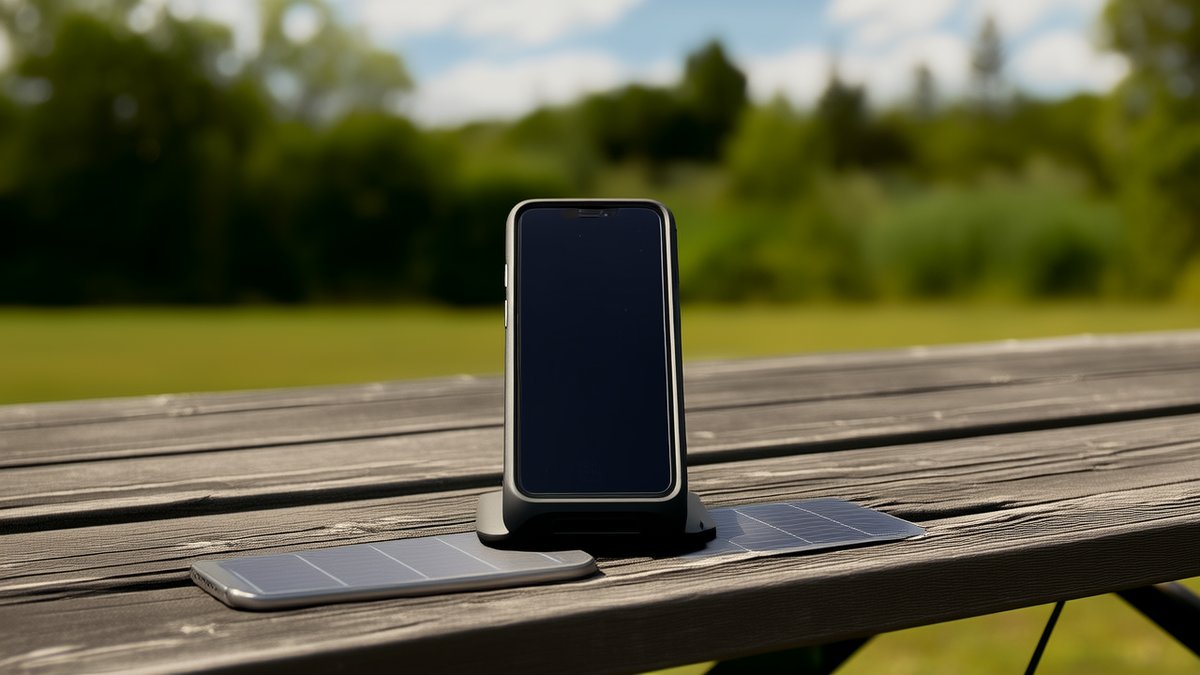
Put simply, the panel is the weakest link in the chain. Among folding panels, something like the BigBlue 28W at a rated 25.4% conversion efficiency is already top tier, while Qi-enabled solar banks such as BLAVOR's typically pack a 10,000mAh cell, 20W wired output, and a Qi wireless stage that negotiates 10W, 7.5W or 5W. But the panel area is small, and a full afternoon of midday sun often adds only around ten-odd percent to the internal battery. Makers themselves label this as emergency trickle, not a primary source. Treat it as a backup and the expectations line up.
Wireless charging then pushes power into the phone and eats another slice
After light becomes electricity, the charge still has to cross the air gap from coil to phone, and that step loses energy too. What wireless charging spends beyond a cable mostly turns into heat, often ten to fifteen percentage points more than the same wired wattage outdoors. The trouble is that outdoor solar is already trickle, so stacking wireless loss on top makes the efficiency look worse. The practical split is clear: let solar trickle and fill slowly, use the cable for a real top-up, and keep wireless for convenience only, like dropping the phone on the pad inside a tent at night instead of fumbling for a plug in the dark.
One-line advice: do not let the word wireless steer the purchase. Check the panel's real conversion efficiency and battery capacity first, keep the wired port powerful, and treat wireless as a bonus. On a long hike where the sun has to keep you alive, it will not save you, but as a campsite top-up it is genuinely handy.
© SWPO. All rights reserved.