When your phone dies away from home, most people's first move is to find a shared power bank kiosk and scan to borrow one. But another habit has been rising too: carry a palm-sized wireless charger and drop the phone on any flat table to top up. Both rescue you, yet they differ a lot in how much peace of mind they actually buy.
Beyond the fee, count compatibility and the freedom to unplug
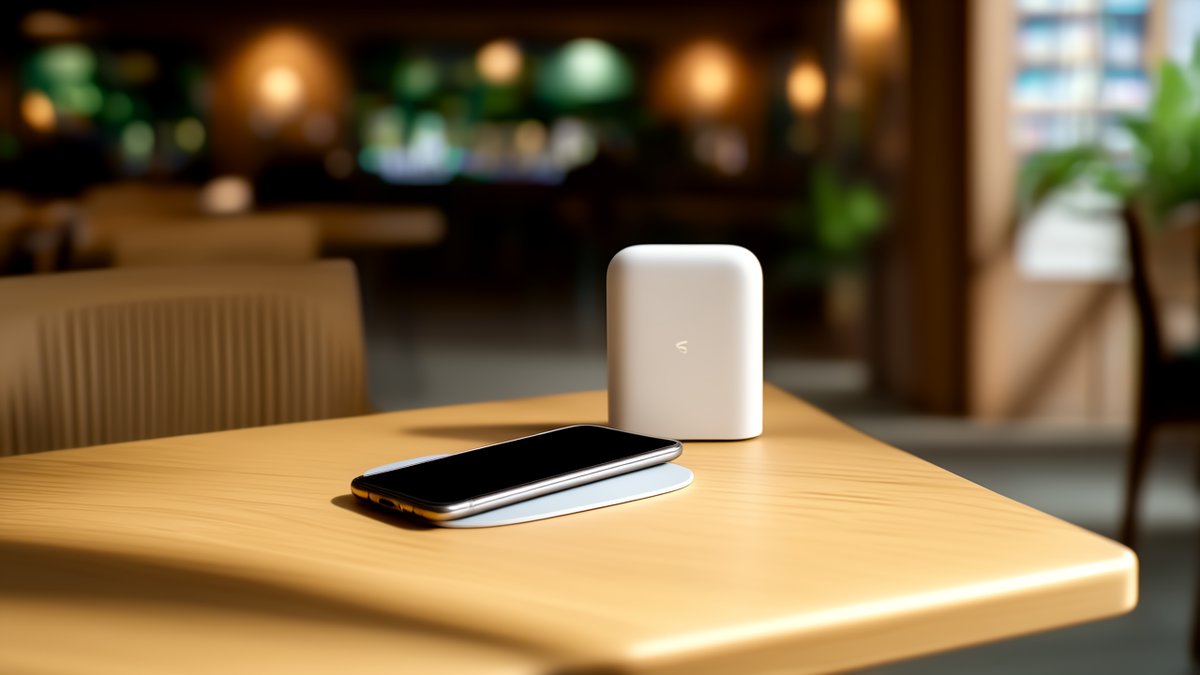
Shared power banks bill by the hour and look cheap, but only if a kiosk is nearby, the port matches your cable, and you are willing to carry the brick until you reach a return point, you cannot just walk away mid-charge. Your own wireless charger skips the rental, as long as the venue offers a flat desk or a table-embedded pad; it is agnostic to phone model, any Qi device works, and you can grab the phone and leave anytime. For frequent travelers, cafe dwellers, and airport waiters, that small pad is simply freer.
Hygiene and privacy are the knots shared rentals cannot untie
A shared power bank is someone else's cable and battery, so contact hygiene is a personal call; more importantly, the rental app usually wants an account, location, and payment authorization, leaving your trail on a third-party platform. Your own wireless charger only talks to your phone, no network, no authorization, no trace. The trade-off is real too: you must remember to bring it, find a power source, and speeds are usually below wired fast charging. In short, for short top-ups when you hate cables, bring your own; for a dead battery with no pad in sight, the kiosk stays the fallback.
© SWPO. All rights reserved.