
When people mention gallium nitride, they first think of smaller wall plugs. Its second battlefield is actually inside the wireless charger, the transmitter's drive circuitry. Swapping that block from silicon to GaN visibly slims the whole board.
Push switching frequency up, shrink the magnetics down
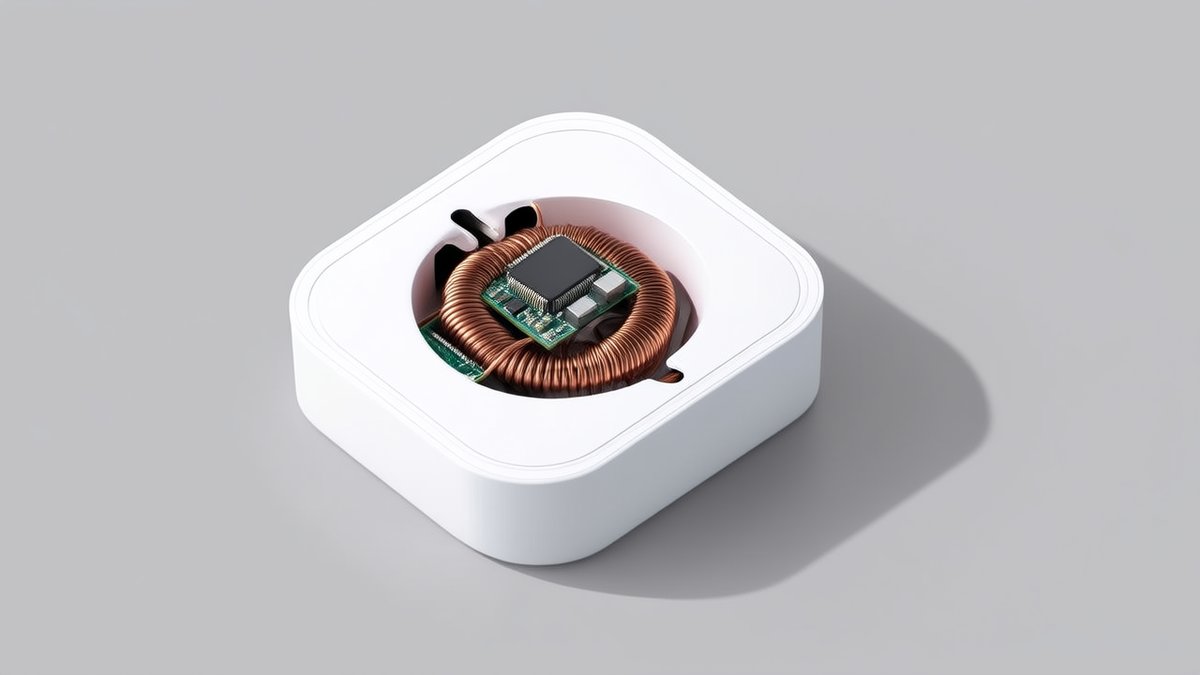
The wireless transmitter is essentially a high-frequency inverter turning DC into the AC the coil needs. Silicon devices overheat once frequency climbs, so old designs compromised with lower frequency and bulkier magnetics. GaN's low switching loss and high voltage tolerance lift the operating frequency substantially, letting the transformer and choke shrink, so the once-space-hogging coil-drive board flattens into a thin slice. The freed space either enlarges the heatsink or simply thins the whole pad.
Heat spreads out, thermal control relaxes
Silicon concentrates heat in a few devices, and as local temperature spikes the board is forced to cut power. GaN runs efficiently with dispersed hot spots, so at the same output the外壳温度 stays flatter and, with NTC control, it holds longer inside Qi2's 40-degree red line. This matters most for thin magnetic pads, where size and cooling were mortal enemies until GaN let them finally sit at the same table.
© SWPO. All rights reserved.